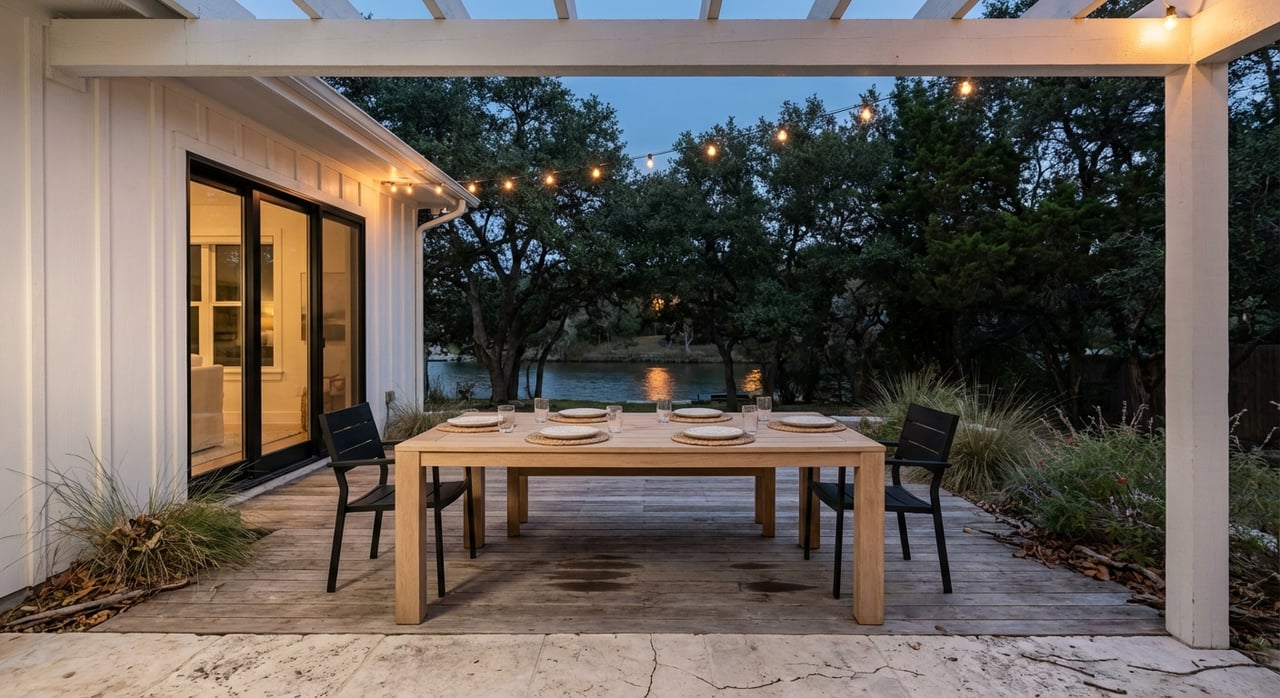
Picture starting your day with coffee on the dock and ending it with a pink‑gold sunset over the Hill Country. If you’re drawn to water, fresh air, and easy access to Austin’s northwest suburbs, Lake Travis might be your perfect fit. In this guide, you’ll learn how lake life actually works here, where different communities shine, what “waterfront” really means, and the must‑ask questions for any showing. Let’s dive in.
Lake Travis overview
Lake Travis is a Colorado River reservoir created by Mansfield Dam. It provides flood control, water supply, hydroelectric power, and year‑round recreation for Central Texas. For context, the lake’s conservation‑pool elevation is commonly cited around 681 feet above sea level, which affects shoreline access and dock usability. If you love waterfront living, lake level is a key detail to keep an eye on. You can explore reservoir facts through the Texas Water Development Board for deeper background on size and elevations (Texas Water Development Board’s Lake Travis page).
The Lower Colorado River Authority, or LCRA, manages the Highland Lakes system and sets rules for docks, marinas, and safety on Lake Travis. Local cities, counties, and property owner associations also apply rules, but LCRA is your primary point of reference for waterfront standards and permits. For a clear overview of how the lakes are managed, review the LCRA Highland Lakes overview.
Lake life and recreation
You can match your lifestyle to your shoreline. Lake Travis offers quiet swim coves, family‑friendly county parks, full‑service marinas, houseboats, and high‑energy party coves. Popular activities include wake sports, boating, fishing, and sunset dining with panoramic views. If you are planning a lake day or scouting neighborhoods by water, check public ramps, parks, and access points on TPWD’s Lake Travis access guide.
Water access options
- Full‑service marinas: From covered slips and fuel docks to rentals and ship stores, marinas make boat ownership and access simple. Many offer party‑barge and double‑deck pontoon rentals. Slip availability can change with the season and some locations maintain waitlists. Browse a representative example at VIP Marina.
- Public parks and ramps: County parks like Pace Bend, Mansfield Dam Park, and Bob Wentz Park offer swim coves, boat ramps, and camping. These are great if you prefer a quieter, family‑oriented day on the water. Learn more about a favorite west‑shore spot at Travis County’s Pace Bend Park page.
- Party coves vs quiet coves: Devil’s Cove is famous for high‑energy weekends during peak season, while many coves are calmer on weekdays or in spring and fall. If you prefer a low‑key experience, plan around the weekend rush. Read a local overview of Devil’s Cove.
Dining and sunsets
Sunset is a big part of the culture here. The Oasis on the south shore is the iconic spot for sweeping views and a festive atmosphere, and it’s a helpful landmark when you’re learning the lake. Get a feel for the setting with this overview of The Oasis on Lake Travis.
Neighborhood snapshots
Lake Travis touches several distinct communities. Your ideal match depends on how you want to balance amenities, space, and the vibe you prefer.
Lakeway
Lakeway sits along the south shore with an amenity‑rich, resort‑style feel. You’ll find established neighborhoods, golf, a yacht club and marina access around Rough Hollow, and convenient shopping. Many buyers are drawn to the city’s services and community resources. For a municipal snapshot, visit the City of Lakeway page.
Lago Vista
On the northwest peninsula, Lago Vista offers scenic elevation changes, deep coves, and a mix of full‑time homes and weekend houses. Newer master‑planned areas, including The Hollows, emphasize community amenities and marina access. The community has grown in recent years and continues to attract buyers who want lake access and Hill Country scenery. Learn more through this Lago Vista community overview.
Jonestown, Point Venture, Briarcliff
These north and west shore communities feel like classic lake towns with POA amenities and marina access. You’ll see everything from modest cottages to luxury waterfront estates. Each neighborhood has its own rules and amenities, so it pays to review POA guidelines and marina details when you tour homes. A general starting point for the area’s background is the Jonestown, Texas entry.
Spicewood and Pace Bend
Out west, you’ll find more acreage, cliffside vistas, and a rural Hill Country feel. Pace Bend Park anchors the area with dramatic overlooks and popular swim coves. Buyers who want more privacy often focus here while still enjoying easy lake access. Explore park details at Travis County Parks.
Liberty Hill and NW Austin connection
If you live in Liberty Hill, Leander, Cedar Park, or nearby suburbs, Lake Travis is your natural backyard. Many residents keep a second home here or spend weekends on the water. Typical drives vary widely by traffic and which part of the lake you visit. Plan extra time during summer weekends and holidays. For context on Liberty Hill’s growth and why so many residents crave nearby recreation, see this Liberty Hill overview.
Home types on Lake Travis
You’ll see a wide mix of properties around the lake. Matching your expectations to the terrain and shoreline is key.
- Luxury waterfront estates: Large custom homes with multi‑level outdoor living, big view decks, and private docks. Many sit on elevated lots to capture views.
- Near‑lake homes with access: Homes within walking or golf‑cart range of the water that rely on shared ramps or a community marina. These are common in POA or master‑planned communities.
- Weekend cabins and condos: Smaller cabins, renovated boathouses, or condo units that make excellent second homes. Some sit close to the water with stair runs or cart paths to docks.
What “lakefront” really means
Waterfront here is not one‑size‑fits‑all. Shorelines vary and many properties sit high above the waterline for views. That can mean a long stair descent to a dock or a steep driveway to a boat ramp. In some neighborhoods, private docks are not allowed, and you will rely on a community marina. Walking a property line to confirm access points and dock locations is part of a smart showing plan.
Buyer checklist for waterfront
Lake properties have extra layers. Ask these questions early to avoid surprises and to streamline inspections and lending.
Dock rights and permits
- Confirm whether a private dock is allowed on the specific lot. Ask what dock type is permitted and whether an LCRA permit or lease is required. Rules affect design, placement, and costs. Start with the LCRA docks and marinas page.
Flood zone and elevation
- Review FEMA flood maps and request an Elevation Certificate if a structure may sit in a Special Flood Hazard Area. Lenders often require flood insurance. A local municipal resource, like the City of Cedar Park’s floodplain FAQ, explains how elevation and mapping affect insurance and permitting. See the Cedar Park floodplain FAQ.
Septic vs municipal sewer and water
- Many lake homes use septic systems. Others, including parts of Lakeway and some newer areas, have municipal or MUD‑provided sewer. Order a septic inspection and confirm service providers. Local MUD announcements can also flag future service plans, like Lakeway MUD updates.
Shoreline stabilization and bulkheads
- Ask for the shoreline repair history, engineer reports, and permits for any major work. Shoreline improvements can require both local permits and LCRA authorization. Use the LCRA permitting guidance as your starting reference.
HOA, POA, and marina memberships
- Community rules often control slip availability, usage policies, and fees. Some marinas have membership caps or waitlists. Confirm rules in writing and factor dues or initiation fees into your budget.
Insurance and long‑term risk
- Budget for homeowner and flood insurance quotes early. Lake levels can rise during heavy rains or drop during drought, which can affect dock access and ramp usability. For a plain‑language overview of lake management and safety, see the LCRA Highland Lakes overview.
Seasons and safety tips
Peak season runs from late spring through summer, especially on weekends and holidays. That is when marinas and party coves are busiest. Spring and fall shoulder seasons bring calmer waters and great fishing, with water clarity and temperatures that paddlers and anglers love. Before you head out, check access points and any invasive species advisories on TPWD’s Lake Travis access guide.
For boating rules, many operators born on or after September 1, 1993 need a boater education certification to operate certain vessels. Life jacket and equipment rules apply as well. Get the latest details from the TPWD boater education page.
Because the Highland Lakes are actively managed for flood control and water supply, lake levels can swing with weather patterns. The LCRA publishes real‑time data and advisories. Always check current conditions before a showing or a day on the water at the LCRA Highland Lakes overview.
Is Lake Travis right for you?
If you want a lifestyle that blends big‑sky sunsets, community amenities, and access to Austin’s northwest suburbs, Lake Travis delivers. You can choose a quiet cove for peace and space or a marina‑anchored neighborhood with easy weekend rhythm. The key is aligning shoreline realities, access needs, and permitting with your vision for daily life.
When you are ready to tour, we will help you confirm dock rights, read elevation and flood details, coordinate septic and shoreline inspections, and review HOA or marina rules so there are no surprises. If you are coming from Liberty Hill or the NW corridor, we can pinpoint neighborhoods that match your preferred drive patterns and your ideal vibe, from Lakeway convenience to Spicewood privacy.
Curious which cove fits your lifestyle and budget? Let’s map it together. Connect with the boutique team at Cashmere Realty Group and let’s grab coffee to plan your Lake Travis search.
FAQs
What is Lake Travis and who manages it?
- Lake Travis is a Colorado River reservoir that supports flood control, water supply, power, and recreation, managed by the LCRA with local rules layered in.
How do marinas and boat rentals work on Lake Travis?
- Full‑service marinas offer slips, fuel, and rentals, often with waitlists; check examples like VIP Marina and confirm availability directly with each operator.
Where can I find public access and swim coves?
- County parks such as Pace Bend, Mansfield Dam Park, and Bob Wentz Park provide ramps and swim areas; TPWD’s access guide lists current options and rules.
What should I verify before buying a waterfront home?
- Confirm dock rights and permits, check flood maps and elevation, inspect septic, review HOA or marina rules, and gather insurance quotes early in the process.
How do seasons affect lake life on Lake Travis?
- Summer weekends are busiest, while spring and fall bring quieter waters and great fishing; always review LCRA updates for lake levels and safety advisories.
Are drive times from Liberty Hill to Lake Travis consistent?
- Travel times vary by traffic, route, and which shore you visit; plan extra time on summer weekends and holidays when activity peaks.